 Gordian Stack
The Gordian Stack is Blockchain Commons' set of open, interoperable technologies for communicating in secure & interoperable ways, ensuring data resilience, and making digital identity self-sovereign. They help people to control their own digital lives. This page links to live demos and web tools where you can try parts of it for yourself. If you're a developer, we encourage you to then incorporate these open technologies into your own work.
Why the Gordian Stack?
Too much of the internet asks you to trust a platform that sees everything: you log in through one of a few large companies, reveal more than the task requires, and then leave your data behind when you go. The Gordian Stack takes a different approach. It is not an app, but a layer underneath apps that decides how keys are held, how data is stored, and how devices talk to each other. It does so with a focus on the four Gordian Principles:
- Independence. Improve user freedom from involuntary oversight and external control.
- Privacy. Protect against coercion with non-correlation, privacy, and pseudonymity.
- Resilience. Decrease the likelihood of users losing funds or identities via any means.
- Openness. Support open infrastructure to allow developers to create their own applications.
Below are demos that are working examples for developers (not products) that demonstrate some elements of the Gordian Stack. Try them, read the code, and build your own. Everything here is free and open source. See the touchpoints page at our developer website for a more extensive look at the Gordian Stack.
 Passkey Demo
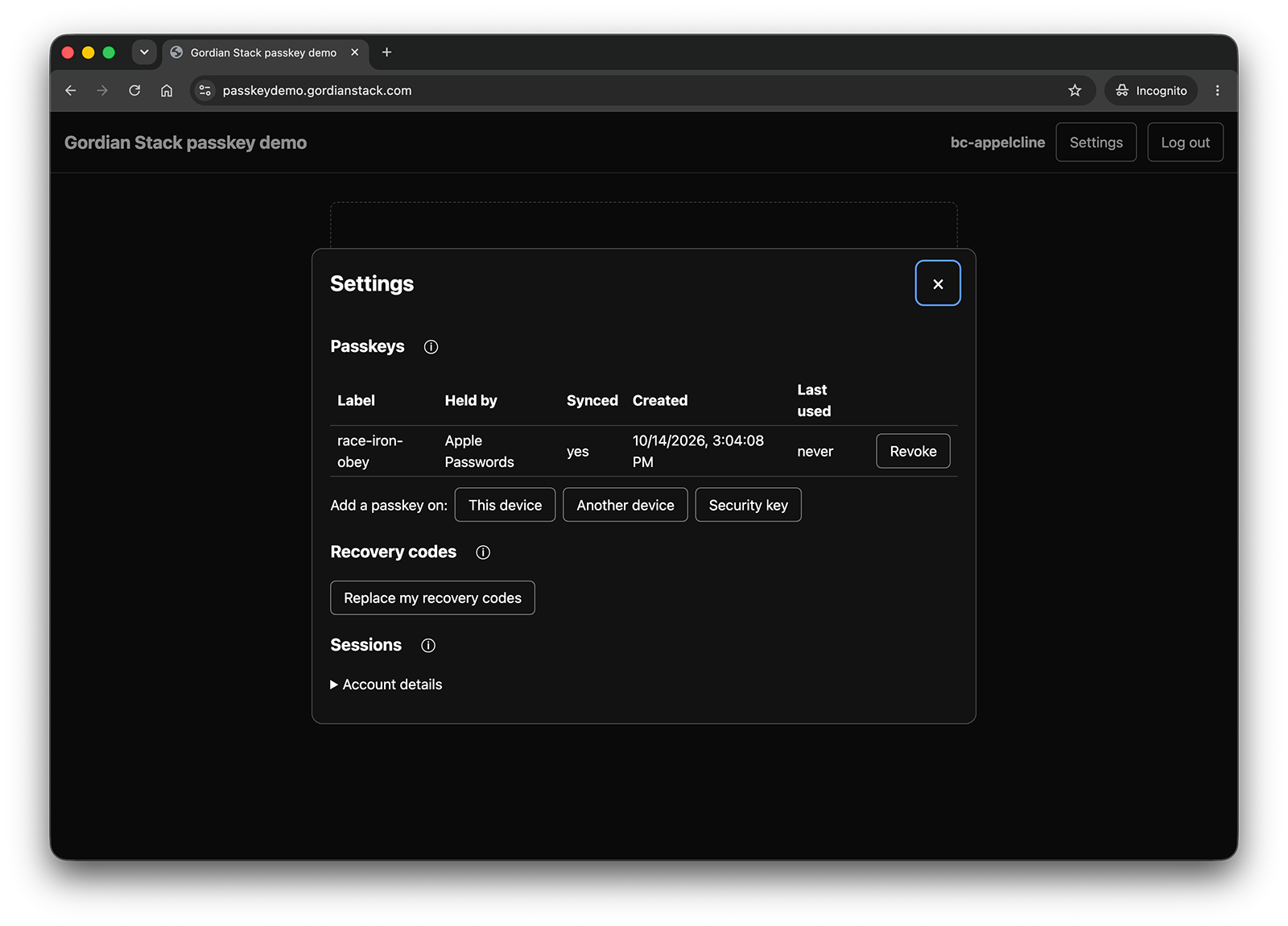
Web Demo. Create a passkey at gordianstack.com and log in with it, with no password, email address, or identity provider between you and your account. The demo runs on passkey-cloudflare, our passkey-only identity library for web apps, built on Cloudflare Workers and Durable Objects. Your recovery codes are cryptographic seeds, shown as URs, Bytewords, or BIP-39 words that you can store in Gordian Seed Tool (or whatever seed storage you use).
 Open Integrity Forge Demo
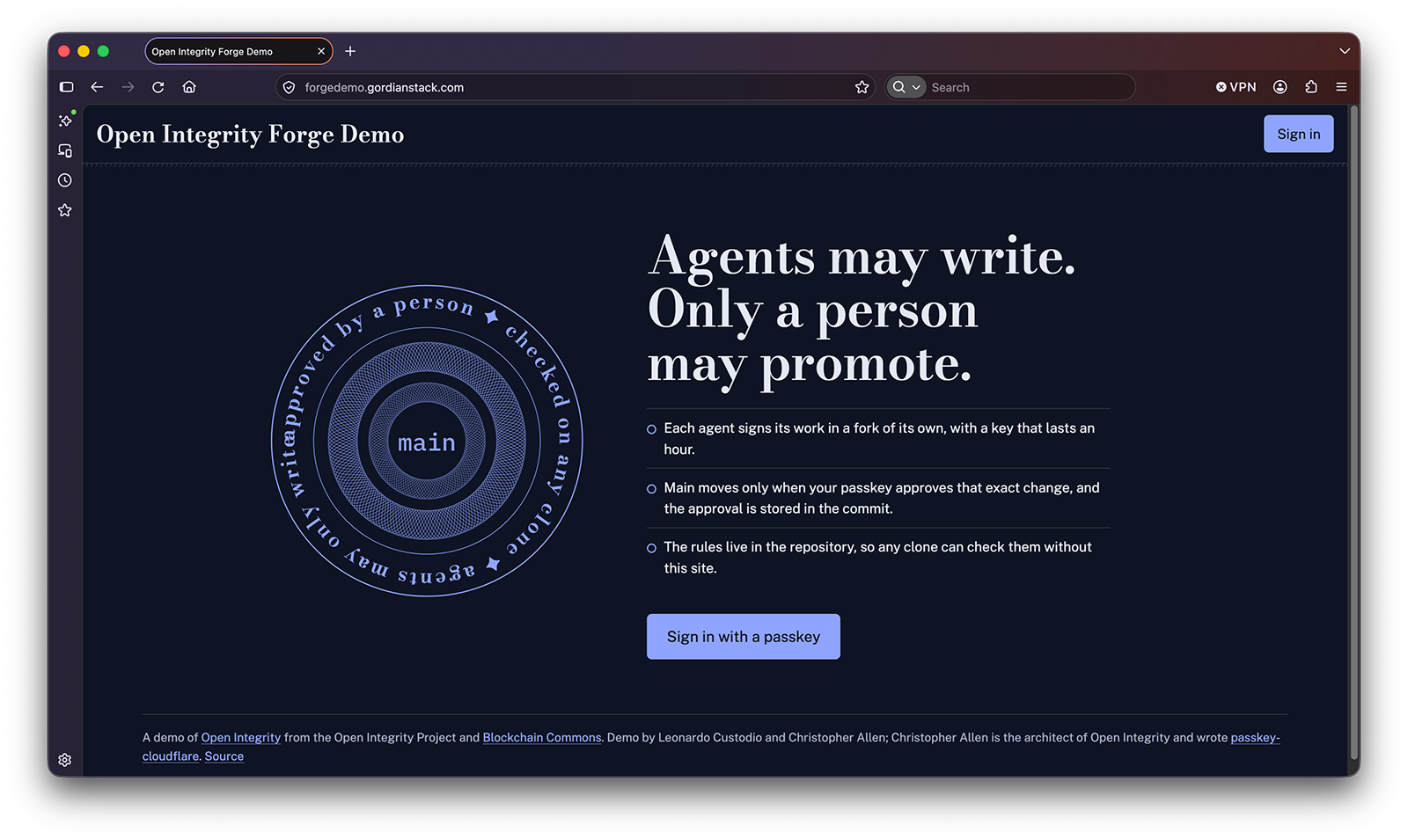
Web Demo. A proof-of-concept Git platform that keeps a human in charge of what AI agents commit. Each agent works in its own fork with a one-hour signing key, and only the person holding the passkey can merge its changes into main. In this demo, you create a passkey and log in, make a first commit, admit two agents, watch them work, promote one change, and bounce another when an agent goes rogue.
 LifeHash
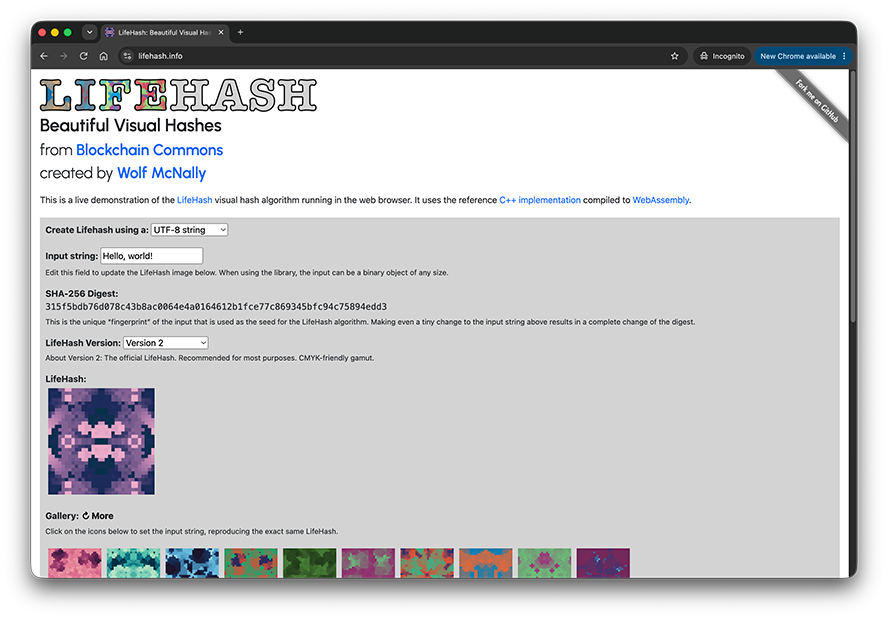
Web Tool. Type any text, or paste a SHA-256 digest, and see its LifeHash: an icon drawn by running Conway's Game of Life from a hash of the input. Lifehashes are designed so that users can recognize a seed, key, or address at a glance. The same input always gives the same icon, and different inputs give icons that look different. The page runs our C++ LifeHash library in your browser, compiled to WebAssembly, and does not send to the cloud. LifeHash is a visual aid, not a cryptographic hash.
 Seedtool
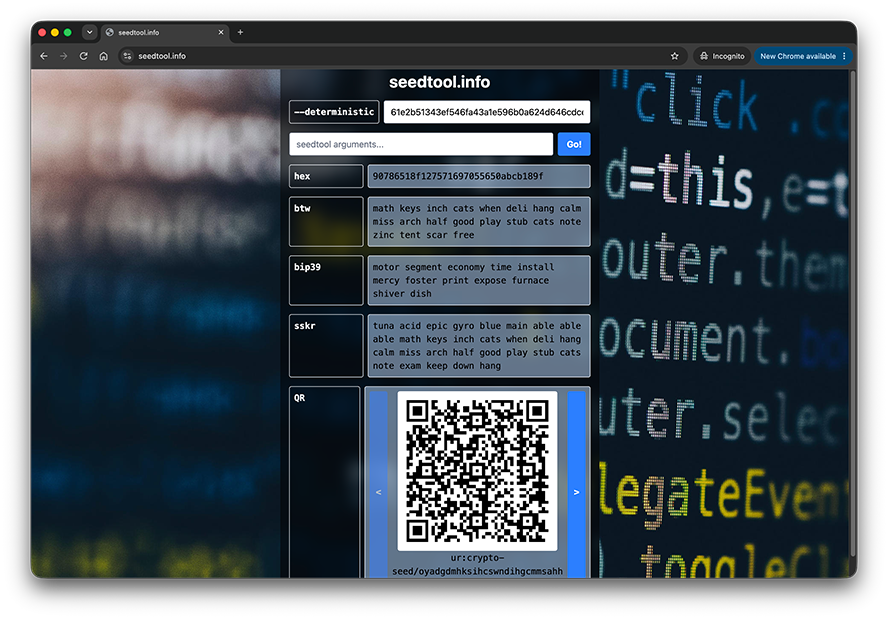
Web Tool. Our seedtool command line, running in your browser. It starts with fresh random entropy, or takes your own, along with any seedtool arguments. It then generates a seed that it shows as hex, Bytewords, BIP-39 words, SSKR shares, and a QR code. Do not use seeds generated online to store assets! This is a demo only.
 BCTS IDE
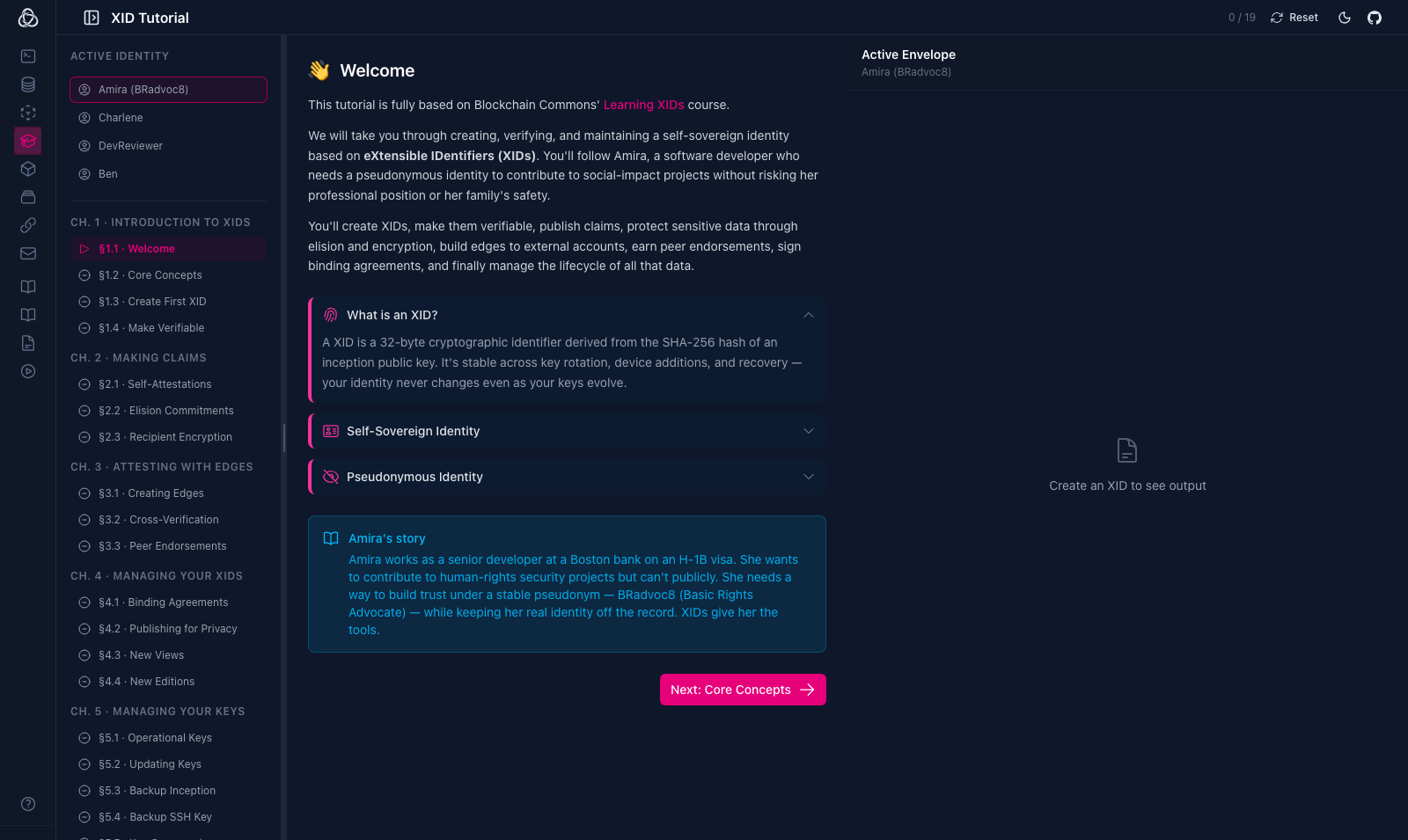
Web Tool. A playground for our TypeScript libraries. Paste hex, a UR, or Bytewords into the Data Playground and see the dCBOR inside as annotated hex and diagnostic notation. The Registry Browser lists Known Values and CBOR tags, and an early Envelope Builder assembles a Gordian Envelope layer by layer. The XID Tutorial follows our Learning XIDs course, from creating a first XID to publishing claims, earning endorsements, and updating keys.
More from Blockchain Commons
- Our Technologies, the full Gordian Stack: data formats, data resilience, digital identity, signatures, and secure communication.
- Gordian Principles
- Reference Apps, including Gordian Seed Tool for iOS.
- Blockchain Commons on GitHub
- Support Blockchain Commons
Header image by ElasticComputeFarm from Pixabay.